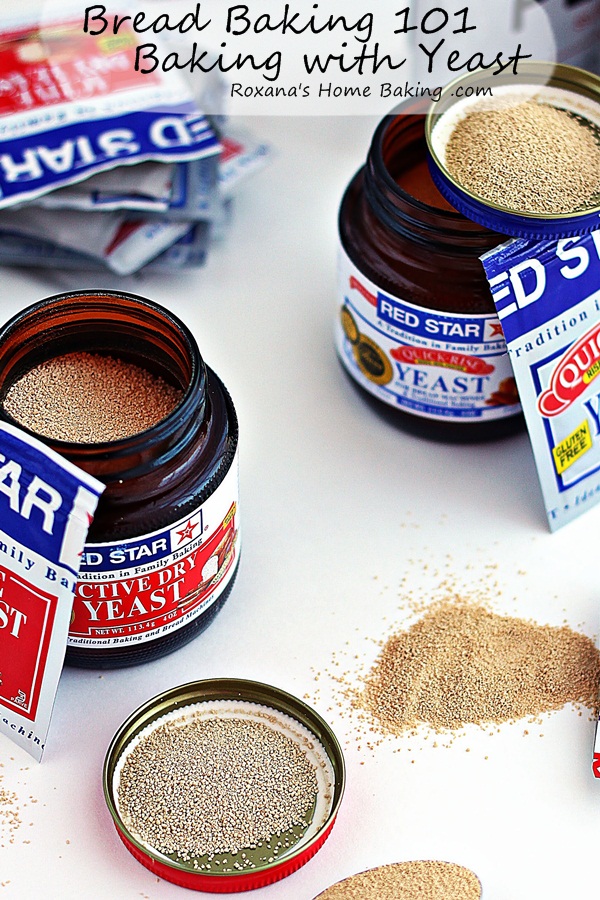
How to bake with yeast is probably the most asked question I get. Well, today I’m going to share a couple of tips that will make baking with yeast a child-play.
In case you missed the previous posts of my Bread Baking Series, here are the links
Bread Baking 101 – Commonly used ingredients : water, salt, sugar, milk, butter, oil, eggs
Bread Baking 101 – Commonly used ingredients : flour
Bread Baking 101 – Commonly used ingredients : yeast
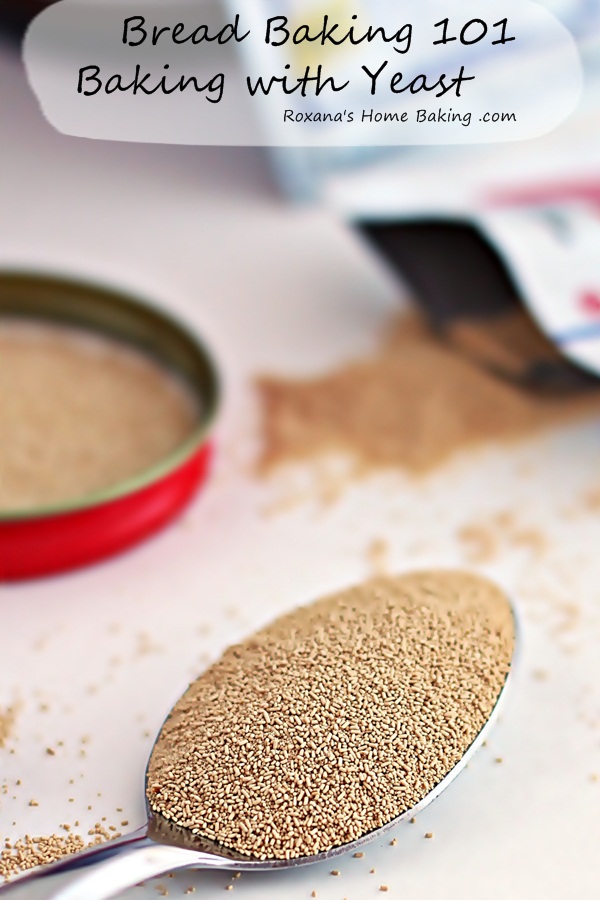
First, what is yeast?
Yeast is the only alive ingredients used in bread (sometimes I think that’s why some people are scared of it). It is made up of microscopic single-celled fungus, Saccharomyces cerevisiae. When it gets in contact with a warm liquid(water or milk) and fed with sugar and flour, it starts giving off tiny bubbles of carbon dioxide gas. This gas, trapped between the gluten webs, is what makes bread rise and achieve its light texture.
Yeast is the most popular leavening agent for bread baking. It is really easy to use, and once you’ve mastered it, there’s no going back to the store-bought bread. Baking your own bread is magical.
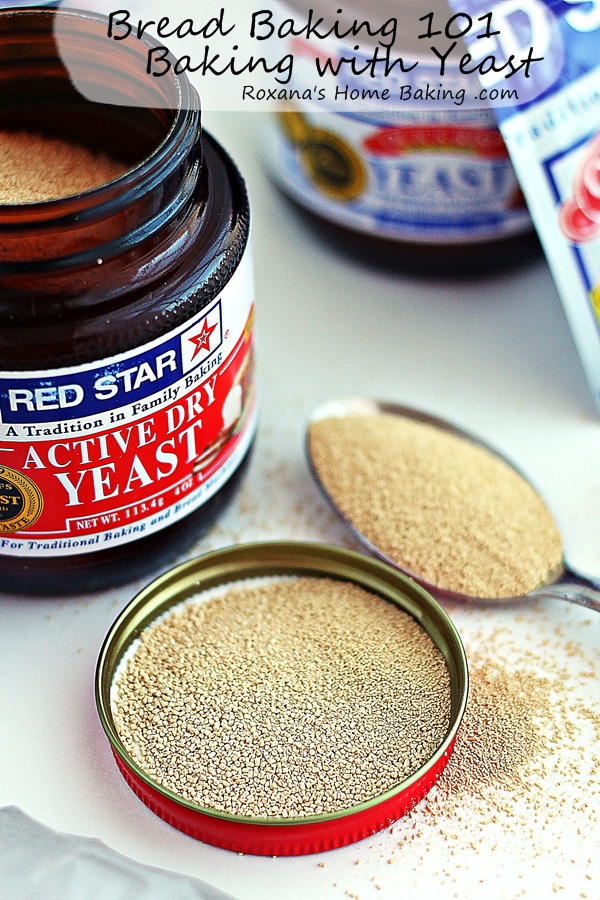
As most of you probably know there are three types of yeast easily available at any supermarket.
Active dry yeast
Rapid rise dry yeast
Instant dry yeast
I’ve heard people saying that rapid rise yeast and instant yeast are the same, but I don’t think so. I’ve baked with both of them, and although they make the dough rise faster, but the instant one is more forgiving, I’ll talk more about it in a minute.
Active dry yeast
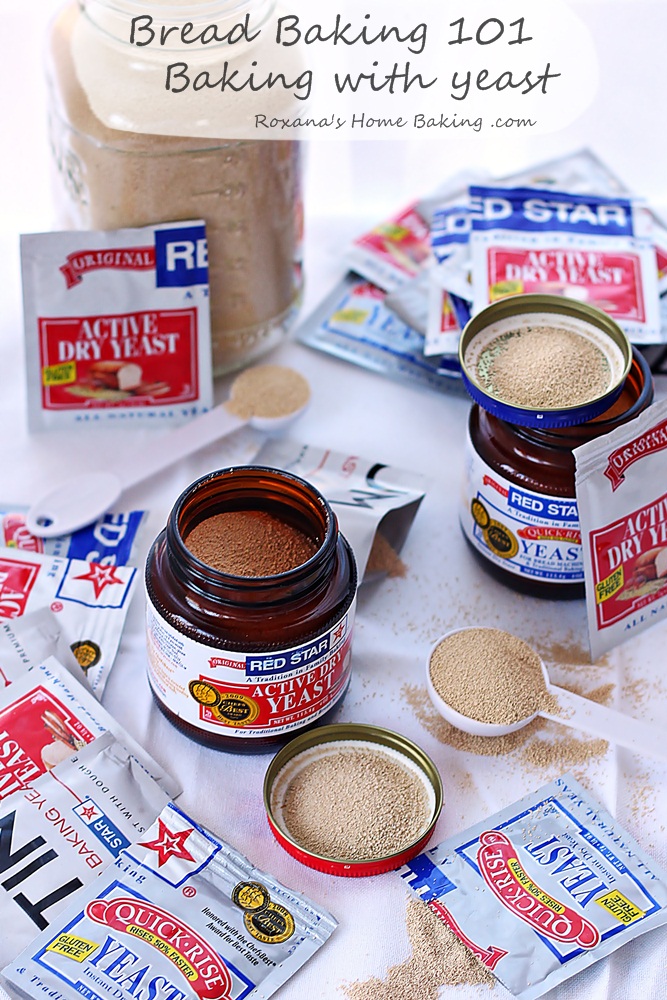
Active dry yeast is definitely the most used dry yeast on the market. Unless otherwise specified, most of the bread recipes are using active dry yeast. It looks like tiny granules which have been dehydrated and put to sleep before packing. Once you mix it with water it wakes up.
Unlike rapid rise and instant yeast, active dry yeast must be proofed before mixing it with the other ingredients. A little sugar or honey can be added when proofing it to jump-start its growth.
Active dry yeast is mostly available in strips of 3 envelopes (7 grams each) or 4 oz jars manufactured my Red Star Yeast (my preference) and Fleischmann’s.
Rapid rise yeast
Another type of dry yeast, rapid rise, as the name suggests will make your dough rise faster, sometimes in half the time. It is milled a little finer than active dry yeast. Since the granules are smaller in size, you can mix it directly with the flour, without the need to proof it first.
This type of yeast is sometimes found also under the name of “bread machine yeast”.
Instant dry yeast
Instant dry yeast is another type of fast acting yeast, milled even finer. Compared with active dry yeast, instant yeast speeds up the rising time by half. It is designed to be mixed directly with the dry ingredients. When using instant yeast, not only you can skip the proofing but you can skip the first rise as well, shaping the bread as soon as you finished kneading it. I do not recommend doing this, since you’ll lose all the flavor the bread will develop while rising.
There are only a few times when I prefer using rapid rise or instant yeast in my bread recipes. When the dough requires a lot of resting time, like these homemade croissants. Or you can use it in pizza crust and flatbreads, since they are baked as soon as you shape them.
Instant dry yeast is the most forgiving at all. If you still fear baking with yeast I suggest starting with the latest yeast product from Red Start Yeast : PLATINUM. I’ve talked about it when I made croissants, and also used it in my Steakhouse Bread, Cardamom Coconut Buns, Cottage Cheese Dinner Rolls, Plum Cake, Pizza Crust and Flatbread.
Even tho rapid rise and instant yeasts are designed to be mixed with the dry ingredients, I do not recommend that. No matter what type of yeast you’re using I suggest proofing it. This way you know your yeast is alive. If the yeast is dead, you wasted your time and the other ingredients. Better safe than sorry!
Proofing yeast
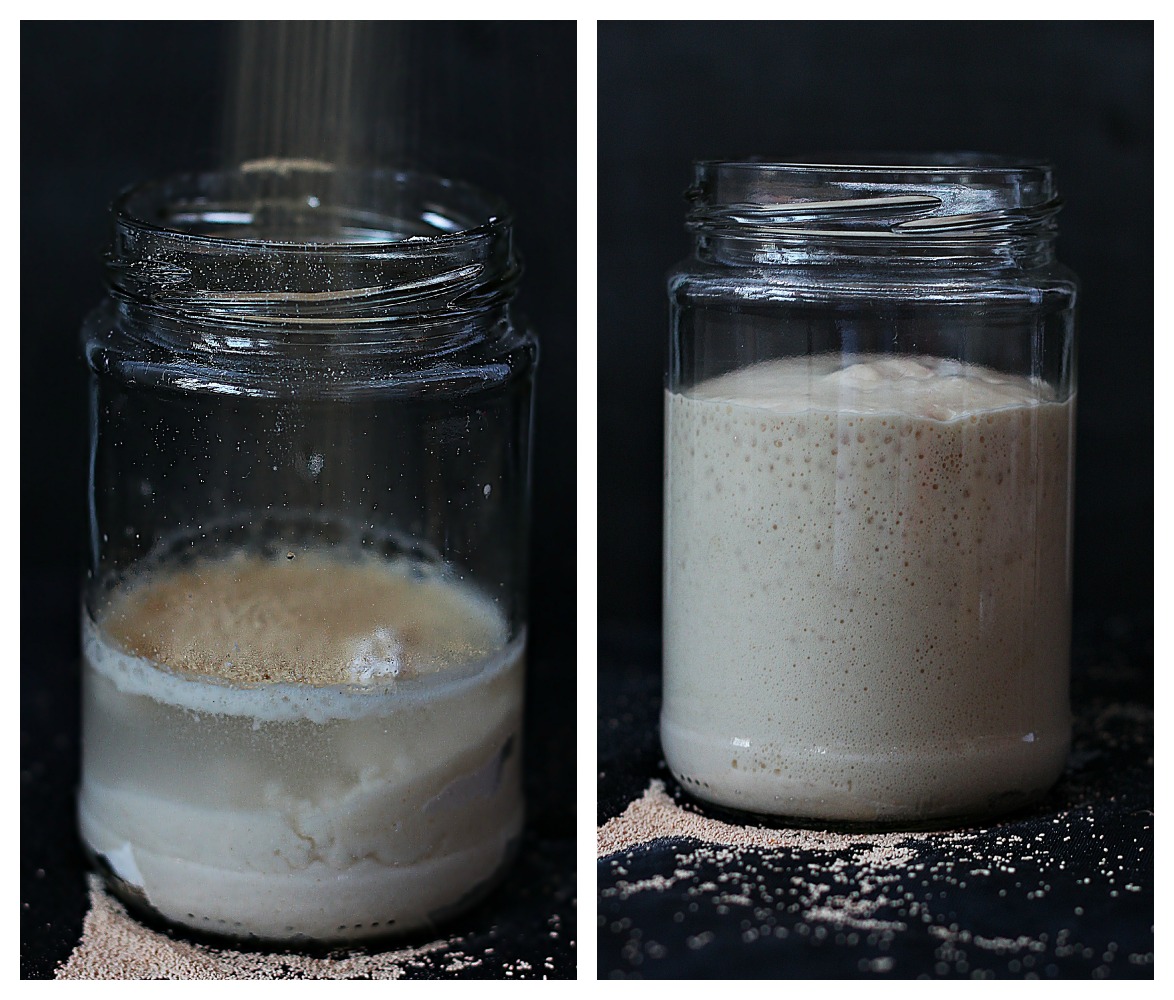
Proofing is the process of mixing lukewarm water (or other liquid) with yeast before combining it with the rest of the ingredients. This process can be done in a separate bowl, mixing just the liquid with the yeast and waiting around 5 minutes until foam appear at the surface.
There are other ways to proof yeast, which, lately I use them more often, one of them being the sponge method.
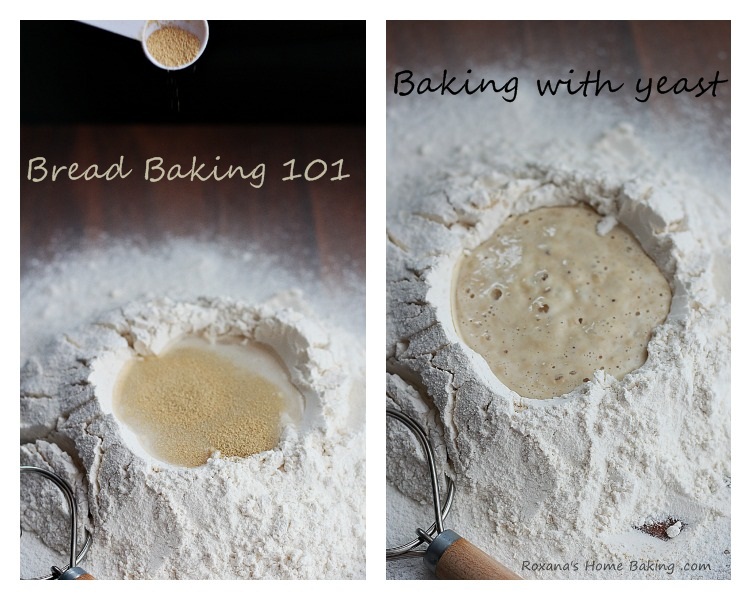
The yeast is mixed with a small amount of water and flour to make a batter. This can be done in a separate bowl or by making a well in the middle of the flour. The better is left to rest for about 10 minutes until bubbles appear at the surface and the mixture has a spongy texture. You’ll have to keep in mind that a wet sponge (one that uses more liquid) will rise quicker than a firm one (one that uses more flour). Since I haven’t shared a recipe for baguette or ciabatta yet I won’t be talking today about the French sponge called poolish or the Italian biga.
There are a couple of thing you have to keep in mind when baking with yeast.
– yeast, like all living things, needs four things to survive : warmth, moisture, food and oxygen.
– yeast needs warmth to activate. the water used must be around 105F. Too hot and it will kill your yeast. Too cold the yeast will take longer to activate. If it makes you feel more comfortable, buy an instant thermometer to check the water temperature.
– yeast needs sugar and starch to grow. You don’t necessary need to add sugar, yeast will feed on sugar and starches from the other ingredients used in the dough, which will make the dough to rise.
– yeast needs warmth to feed. Your kitchen temperature should be around 70F, for best results when letting the dough to rise.
– always check the expiration date. there’s nothing more annoying that waiting for your yeast to do its job, weeks or months after it has expired.
– yeast is best stored in the freezer and brought to room temperature just before using it.
– yeast goes back to sleep when temperatures are too low. If you decide not to bake all those rolls or that second loaf of bread, just wrap it well in plastic wrap and place it in the freezer. The rising process will stop soon. Once you decide to bake, just leave at room temperature for about 1-2 hours.
– one envelope of yeast is used for 4 cups of flour. Do not use more thinking you’ll get more bread or you’ll speed up the process. All you’ll end up with is a strong smell and taste of yeast in your bread.
I hope by now I scared your yeast-phobia. If you have questions, leave them in the comments below and will answer them.
Sending love your way,
Roxana
*I’ve asked Red Star Yeast to send me free products to use in my photos. Opinions are all mine.




Comments